
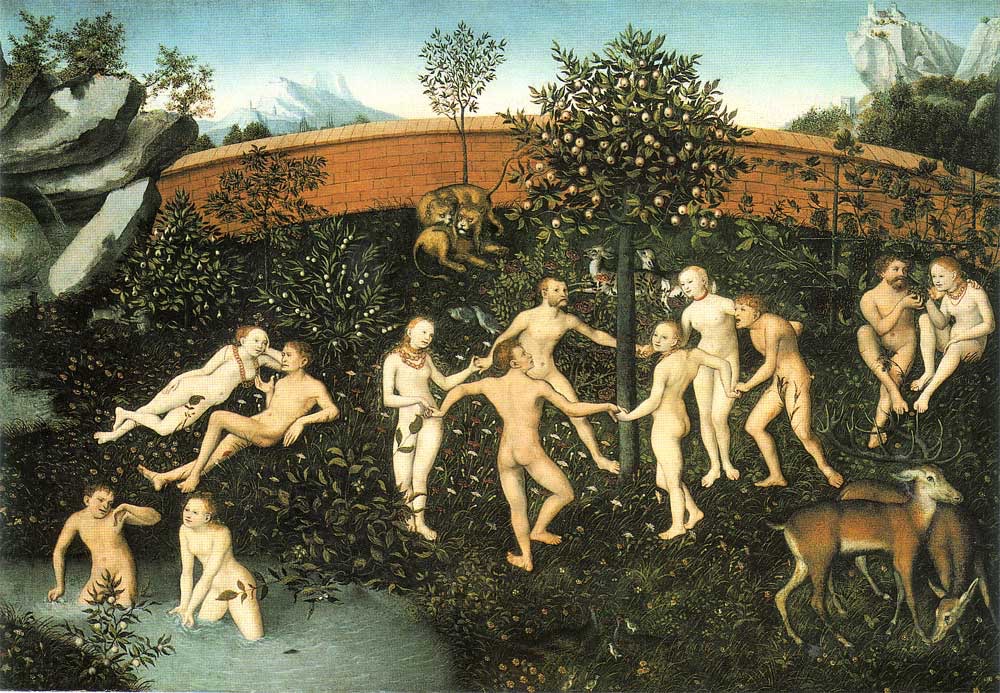
Everything Occurs in Cycles and Seasons
There are always times and epochs of great progress and development and times of great degeneration. In gnostic esotericism it is said there are four ages that humanity passes through in a cyclical manner, like four seasons.
Starting in the spring season, a time where humanity is deeply connected to the divine and existing in a state of harmony, and gradually losing that connection and entering into materialism throughout the cycle.
Spring
The Golden Age, or Satya Yuga in the Vedic tradition. This is a time of great peace and unity, divinity is close to humankind and harmony reigns on Earth.
During this time the Being is present within creation and distributing himself into the consciousness, and humanity acts on behalf of the will of God. All the ancient legends and stories that describe a paradise on Earth are deep internal remembrances of the Golden Age of humanity.
“First of all the deathless gods who dwell on Olympus made a golden race of mortal men who lived in the time of Cronos when he was reigning in heaven. And they lived like gods without sorrow of heart, remote and free from toil and grief: miserable age rested not on them; but with legs and arms never failing they made merry with feasting beyond the reach of all evils. When they died, it was as though they were overcome with sleep, and they had all good things; for the fruitful earth unforced bare them fruit abundantly and without stint. They dwelt in ease and peace upon their lands with many good things, rich in flocks and loved by the blessed gods.”
-Hesiod, Works and Days
Summer
The Silver Age or Treta Yuga. Because this is part of a natural cycle some degeneration begins to occur. Now instead of the Being acting directly on Earth there is just the Essence, or seed of the Being, active.
This is still a conscious humanity and what we would consider a paradise of cooperation, love, and divine influence, but there is the beginning of selfishness, pride, separation.
“But after earth had covered this generation — they are called pure spirits dwelling on the earth, and are kindly, delivering from harm, and guardians of mortal men; for they roam everywhere over the earth, clothed in mist and keep watch on judgements and cruel deeds, givers of wealth; for this royal right also they received; — then they who dwell on Olympus made a second generation which was of silver and less noble by far. It was like the golden race neither in body nor in spirit. A child was brought up at his good mother’s side an hundred years, an utter simpleton, playing childishly in his own home. But when they were full grown and were come to the full measure of their prime, they lived only a little time in sorrow because of their foolishness, for they could not keep from sinning and from wronging one another, nor would they serve the immortals, nor sacrifice on the holy altars of the blessed ones as it is right for men to do wherever they dwell. Then Zeus the son of Cronos was angry and put them away, because they would not give honour to the blessed gods who live on Olympus.”
-Hesiod, Works and Days
Autumn
The Copper or Bronze Age, the Dwapar Yuga, the consciousness sleeps more in materialism and loses touch with God and nature. Here the connection to divinity is through magic, both white and black magic, rituals, mantras, invocations, alchemy, prayers etc.
The connection to the Being is much dimmer and these tools and activities are needed to access the consciousness in its sleeping state.
“But when earth had covered this generation also — they are called blessed spirits of the underworld by men, and, though they are of second order, yet honour attends them also -Zeus the Father made a third generation of mortal men, a brazen race, sprung from ash-trees; and it was in no way equal to the silver age, but was terrible and strong. They loved the lamentable works of Ares and deeds of violence; they ate no bread, but were hard of heart like adamant, fearful men. Great was their strength and unconquerable the arms which grew from their shoulders on their strong limbs. Their armour was of bronze, and their houses of bronze, and of bronze were their implements: there was no black iron. These were destroyed by their own hands and passed to the dank house of chill Hades, and left no name: terrible though they were, black Death seized them, and they left the bright light of the sun.”
-Hesiod, Works and Days
Winter
The Iron Age, the Kali Yuga, which is our current Age. Here we have degeneration and disconnection from God, and a complete identification with the personality and ego. There is the pollution of earth, air, water and fire, both internal and external, and materialism, selfishness, greed, violence, and hatred rules everything.
The Iron Age is characterized by war, and nearly all of the machinery, infrastructure, and weapons are made of steel (iron). The cosmic laws are denser and reflect in denser and more complicated earthly laws that inhibit true justice and true mercy.
“…For now truly is a race of iron, and men never rest from labour and sorrow by day, and from perishing by night; and the gods shall lay sore trouble upon them. But, notwithstanding, even these shall have some good mingled with their evils. And Zeus will destroy this race of mortal men also when they come to have grey hair on the temples at their birth. The father will not agree with his children, nor the children with their father, nor guest with his host, nor comrade with comrade; nor will brother be dear to brother as aforetime. Men will dishonour their parents as they grow quickly old, and will carp at them, chiding them with bitter words, hard-hearted they, not knowing the fear of the gods. They will not repay their aged parents the cost their nurture, for might shall be their right: and one man will sack another’s city. There will be no favour for the man who keeps his oath or for the just or for the good; but rather men will praise the evil-doer and his violent dealing. Strength will be right and reverence will cease to be; and the wicked will hurt the worthy man, speaking false words against him, and will swear an oath upon them. Envy, foul-mouthed, delighting in evil, with scowling face, will go along with wretched men one and all. And then Aidos and Nemesis [shame of wrongdoing and indignation against the wrongdoer], with their sweet forms wrapped in white robes, will go from the wide-pathed earth and forsake mankind to join the company of the deathless gods: and bitter sorrows will be left for mortal men, and there will be no help against evil.”
-Hesiod, Works and Days
The Iron Age Is The Time We Are Living In
Even though it may feel daunting, it is magnificent to do the gnostic esoteric work in these challenging times. The darker the times the more opportunity to work for the revolution of the consciousness.
We can more readily sacrifice with love for others because we are surrounded by physical, mental, emotional and spiritual suffering. We can die within ourselves more because we cannot escape the ego from being revealed. In these times it is difficult to pretend that we do not have desire, fear, anger, etc.
And to elevate and sublimate the sexual energy is the best because the ecstasy of upright sexuality and intact sexual energy brings an internal joy and wisdom that lights our way in the darkness.
This is how we transform our internal iron, copper and silver into gold, creating an internal Golden Age within ourselves and within our lives.
“Everything seemed to have a festive radiance, the splendour of some great, holy triumph attained at last. The caressing sea, green as emerald, splashed softly upon the shore and kissed it with manifest, almost conscious love. The tall, lovely trees stood in all the glory of their blossom, and their innumerable leaves greeted me, I am certain, with their soft, caressing rustle and seemed to articulate words of love.
The grass glowed with bright and fragrant flowers. Birds were flying in flocks in the air, and perched fearlessly on my shoulders and arms and joyfully struck me with their darling, fluttering wings. And at last I saw and knew the people of this happy land. That came to me of themselves, they surrounded me, kissed me. The children of the sun, the children of their sun – oh, how beautiful they were! Never had I seen on our own earth such beauty in mankind. [ ]
“All became so jealous of the rights of their own personality that they did their very utmost to curtail and destroy them in others, and made that the chief thing in their lives. Slavery followed, even voluntary slavery; the weak eagerly submitted to the strong, on condition that the latter aided them to subdue the still weaker.
Then there were saints who came to these people, weeping, and talked to them of their pride, of their loss of harmony and due proportion, of their loss of shame. They were laughed at or pelted with stones. Holy blood was shed on the threshold of the temples. Then there arose men who began to think how to bring all people together again, so that everybody, while still loving himself best of all, might not interfere with others, and all might live together in something like a harmonious society. Regular wars sprang up over this idea.” [ ]
“I moved about among them, wringing my hands and weeping over them, but I loved them perhaps more than in old days when there was no suffering in their faces and when they were innocent and so lovely. I loved the earth they had polluted even more than when it had been a paradise, if only because sorrow had come to it.”
–Fyodor Dostoevsky, The Dream of a Ridiculous Man